
A New Era for Formula 1
Formula 1 has a habit of rewriting its own rulebook between seasons, always chasing the next performance revolution through changing its own regulations. But as we race towards the end of the 2025 season and into 2026, a change is coming that could rewrite the very fabric of the sport itself.
When the lights go out in 2026, it won’t be compact dinosaur juice powering the grid. Instead, it’ll be carbon-neutral synthetic fuels propelling cars at speeds up to 230 mph.
Formula 1’s commitment to 100 per cent sustainable fuel is huge. It marks the most significant endorsement this carbon-neutral technology has ever received. It’s not just a shift in chemistry; it’s a statement of intent that the internal-combustion engine is far from dead.
The Rise of Synthetic Fuels
For decades, automotive manufacturers, governments, and environmentalists have pushed hard for the electrification of our vehicles, often without fully understanding the environmental costs associated with building the new electric infrastructure required. With bans on petrol cars looming and battery technology dominating global investment, the industry may be skid-panning into a corner it can’t pull out of.
But behind the uncomfortable whine of electric motors, a different sound is building. The low-rev rumble of synthetic fuels, or e-fuels, promises to keep the combustion engine alive without the carbon guilt.
Synthetic fuels are made from water, carbon dioxide, and biomass rather than crude oil. The process involves taking a biomass, which includes any organic matter that can be used as a renewable fuel source, such as food waste, burning it at high temperatures with little oxygen to produce carbon monoxide and hydrogen, which are then combined to make synthetic methanol, which can then be refined into synthetic petrol or diesel.
The question is, though: can it really deliver the lifeline the engine has been calling out for?
F1’s Carbon-Neutral Revolution
As set out in section 16.1.2 of the 2026 Formula 1 Technical Regulations handbook (yes, I did read all 207 pages), teams must use low-carbon synthetic fuels to achieve greenhouse-gas-emission savings targets.
But not only that, the fuels used in Formula 1 must be carbon-neutral, but so must be how they’re made. The processes of land-use change, harvesting, transporting any associated biomass, and producing and processing the fuels are all included in the FIA’s greenhouse-gas calculations.
For once, it seems the FIA has actually made a good call. Alongside all the regulation changes that will make the cars smaller and lighter to encourage closer racing, they’re finally addressing one of the most prominent issues in the automotive industry, one that’s been on every petrolhead’s mind for years.
The fuels will be developed by Aramco under direct supervision from the FIA, using captured CO2 and green hydrogen, aiming to achieve a complete net-zero carbon lifecycle, while remaining fully compatible with current internal-combustion engines. This means there’s absolutely no requirement to redesign any of the existing engine architecture.
FIA President Mohamed Ben Sulayem stated that
“Alternative fuels are the next step; on-track innovations continue to help grow on-road changes that impact each of us in our daily lives.”
Mohamed Ben Sulayem
This trickle-down narrative is what’s fuelling hope for the future of a carbon-neutral automotive industry.
Transitioning to synthetic fuels is just one part of the wider Formula 1 Net Zero 2030 initiative. By 2030, the FIA is pushing all teams to use synthetic fuels in race cars and renewable energy sources, such as solar or wind, to power their factories and facilities.
Alongside this, the FIA is dedicated to optimising logistics, grouping races by region to cut down on travel requirements and encouraging remote broadcasting to reduce the number of personnel flying to events.
There are numerous other initiatives associated with this plan, but even now, compared with the 2018 season, Formula 1 has already reduced its carbon footprint by 26 per cent. Emissions from factories and facilities have dropped by 59 per cent, and travel-related emissions have been cut by 25 per cent.
And with the sport’s reputation as the fastest and most intense racing series on the planet, building its next chapter on sustainable synthetic fuels, while the rest of the industry electrifies itself, could serve as a wake-up call for manufacturers around the world.
Crucially, none of these changes will impact the viewing experience for fans. The whole idea behind synthetic fuels is to maintain the sound, feel, and drama of racing, not erase the elements that built its entire fandom. The FIA doesn’t want silent racing; it just wants sustainable noise.
From the Track to the Road
F1’s adoption of synthetic fuel proves it’s more than a science-fair project. As former world champion Jenson Button put it:
“If F1 can run 20 cars flat-out for two hours on carbon-neutral fuel, what’s stopping the rest of the world?”
Jenson Button
The race track has always been the laboratory for everyday driving. Formula 1, singlehandedly, is responsible for developments in hybrid technologies, turbocharging, increased engine efficiencies, active suspensions, paddle shifters, brake-by-wire, torque vectoring systems, and even carbon fibre.
Therefore, as F1 decides to implement synthetic fuels across the sport, it’s almost guaranteed that we’ll be filling our own cars with the same thing soon.
Industry Giants Join the Race
Even though F1’s endorsement of synthetic fuels is a recent development, numerous automotive companies have been investing and experimenting with these fuels. Porsche, BMW, Toyota, and Mazda are all companies already working with synthetic fuels.
These companies all have personal interests driving their investments, preserving performance history, extending their own dominance over the internal combustion engine market, and appealing to enthusiasts who refuse to even go near electric vehicles.
Porsche has invested millions into synthetic fuels, seeing it as the only way to keep its famous flat-six engine alive. Toyota and Mazda, on the other hand, are testing synthetic fuels in endurance racing, breaching more motorsports than just Formula 1.
But when a global powerhouse like Formula 1 publicly promotes carbon-neutral fuel, it sends shockwaves far beyond the racetrack. Policymakers, regulators, and governing bodies start to pay attention, realising that what once seemed like a distant dream is rapidly becoming the only viable solution to a carbon-intensive industry.
The European Union’s 2035 e-fuel exemption, which might have been dismissed as a symbolic gesture or technical fantasy a decade ago, now stands as a credible, even transformative, pathway for the future of mobility and the automotive industry at large.
Right now, synthetic fuel costs around ten times more to produce than petrol, affordable for a Grand Prix team, but nowhere near affordable for the average commuter. The energy intensity of production remains a significant obstacle: every litre of synthetic fuel requires an immeasurable amount of clean energy that could otherwise be used to decarbonise homes or industries directly.
If synthetic fuels are to move beyond showcase projects, they’ll need not just technological breakthroughs but an industrial revolution in how we make, move, and value energy itself, and, overall, they need to be affordable.
The cost of being a petrolhead is already high, and you don’t want to alienate anyone from an industry or sector they love. Cars are more than just transport for some people; they’re emotional, historical, and either your best friend or your worst enemy. Synthetic fuels let us maintain the visceral and emotive nature of cars with internal combustion engines, without jeopardising our Environment.
If Formula 1 can make good on its promise and prove that synthetic fuels can power Formula 1 cars at 230 mph, and Porsche can refine them for the road, it only really leaves one question: are they really as environmentally friendly as they claim to be?
Now, synthetic fuels are making waves; however, they’re far from the limelight. The industry still has its eyes fixated on electric vehicles, or even hydrogen cars, both with their own mechanical and technological restrictions.
But that’s not to say that they’re being ignored. The synthetic fuel industry has the potential to be one of the largest multi-billion-pound sectors, so right now it’s a race to see who can be the first company to sustainably produce scalable and truly carbon-neutral synthetic fuels.
One of the most prominent pioneers in synthetic fuels is Porsche & Highly Innovative Fuels (HIF) Global. Their base is located in Punta Arenas, Chile, chosen for its near-consistent wind power, where they capture CO2 from the air and hydrogen from wind-powered electrolysis to create synthetic methanol, which is then refined into petrol.
The site has the production capability of 550 million litres annually by 2027-2028, which, to put into scale, the UK consumed 17.281 billion litres of petrol in the 2023-2024 financial year. This means the site would have to create 31.42 times the amount of synthetic fuel they would be able to produce by 2027-2028, just to account for the UK’s annual consumption of petrol.
On the other end of the scale, we have Zero Petroleum, based in the UK, which is stirring the synthetic fuel industry by using direct air capture and renewable electricity to create synthetic hydrocarbons. The company was founded by ex-Formula 1 driver Paddy Lowe, who has just partnered with the RAF to supply sustainable synthetic jet fuel for carbon-neutral jet trials.
Now Zero Petroleum’s objective isn’t for mass consumption, rather a proof of concept of sustainable fuels for aviation and defence sectors, where electrification is much more complicated.
Oil companies aren’t, however, just watching their companies slowly die. Aramco, ExxonMobil, and Repsol are quietly repositioning themselves as “carbon managers”, betting that investing in synthetic fuels could extend the relevance of oil-era infrastructure for decades.
Aramco is already in the paddock, working with Formula 1 to develop synthetic fuels that can flow straight into existing engines. ExxonMobil, meanwhile, is talking up “advanced biofuels” and experimenting with carbon-capture-enhanced petrol. Repsol has gone further still: a full-scale industrial e-fuel plant in Bilbao, Spain, supposedly set to fire up in 2025.
It’s not charity; it’s strategy. These moves are set to preserve assets and keep pipelines and refineries functional in a post-oil age. And while chemistry can, in theory, be powered entirely by renewables and recycled CO2, none of these projects yet run as carbon neutral. Where the electricity comes from still determines whether these fuels are a climate solution or just a company changing its tone but not its promises.
While Porsche and HIF are producing sustainable fuels, brands like Audi, BMW, and Toyota are also dipping their toes into the pool of synthetic fuels. Audi’s been developing synthetic fuels in collaboration with Global Bioenergies and Sunfire. BMW is trialling synthetics in its Deutsche Tourenwagen Masters race cars and tying the research into its hydrogen-hybrid ecosystem. Toyota, predictably, is trying everything: backing multiple endurance-racing synthetic fuel trials and promoting itself as the world’s most indecisive brand. But ultimately, each approach signals the same thing: the internal-combustion engine isn’t quite ready for the museum yet.
The phrase carbon neutral often hides asterisks. Most producers today recycle CO2 from industrial settings, and not from the open atmosphere.
That makes them cleaner, but not necessarily spotless. True neutrality demands direct air capture and fully renewable energy at every step of the process; greenwashing a company is simply not good enough.
Still, the direction is clear. The technology works; it just needs the scale, power, and policy to make it matter.
With prototypes turning into production-ready fuels, and oil giants rebranding themselves as clean-tech pioneers, synthetic fuels are finally on the grid. The question now is whether they can really win the race for sustainability.
The Debate: Promise or Pipe Dream?
Now, seeing that the car community will set out and try to kill you for having a different favourite Subaru model, it was inevitable that the scene would be divided when it came to synthetic fuels.
Some petrol heads love the idea, some have set their sights on electric vehicles, and some see synthetic fuels as a wolf in sheep’s clothing. But some of the most prominent Formula 1 drivers have voiced their support for the initiative.
Jenson Button and Sebastian Vettel have both publicly shown support for synthetic fuels, with Jenson referring to them as a lifeline, while Vettel has gone so far as to run his very own 1992 Williams F1 car on his own sustainable clean fuel. But not everyone is convinced.
Lewis Hamilton, The Billion Dollar Man, has backed the electrification of the automotive industry, but still finds space for the integration of synthetic fuels alongside electric vehicles to preserve automotive history. But he does believe it isn’t the be-all and end-all solution some of us make it out to be, claiming:
“We can’t burn our way out of a climate crisis.”
Lewis Hamilton
Porsche’s research and development chief, Michael Steiner, insists the technology isn’t nostalgia dressed as progress: “Synthetic fuels allow existing vehicles to become part of the climate solution,” he says, offering what sounds like absolution to every flat-six and V8 that ever echoed through a tunnel. Toyota’s Akio Toyoda, ever the realist, adds, “We shouldn’t limit our options to a single technology.” Which translates to: there’s more than one road to net zero, and it doesn’t have to be silent.
To automakers, synthetic fuels aren’t a desperate attempt to cling to the past; they’re a bridge between eras. For brands built on revs and resonance, the appeal is obvious. They get to keep their heritage alive while being a part of the carbon-neutral future, a marketer’s dream.
But not everyone’s reaching for the nozzle. Transport & Environment, one of Europe’s loudest green lobbies, dismisses synthetic fuels as “a luxury fix for a tiny fraction of cars.” Greenpeace calls them “a distraction, expensive, inefficient, and too slow for the climate emergency.” To them, the planet’s burning, and synthetic fuels are part of the issue, as they play with the thermostat.
While a litre of synthetic fuels can, in theory, be carbon-neutral, producing it consumes vast amounts of renewable electricity, power that, critics argue, would be better spent charging batteries or developing the grid.
Automakers counter that progress doesn’t have to be binary. Not everyone can afford or wants an EV, and billions of combustion cars still roam the planet, where the environmental impacts of building electric vehicle components are horrendous.
“It’s not about replacing electric vehicles,” Steiner told reporters, “it’s about complementing them.” In that, synthetic fuels are more about inclusivity, a way to keep existing cars in the climate conversation rather than jumping to have them scrapped.
Among enthusiasts, though, synthetic fuels carry almost a religious significance. On Reddit and car forums, they’re spoken about like a resurrection, the second coming of combustion. “Great idea,” one post reads, “shame it’ll cost £8 a litre.” as their cynicism meets hope in an array of memes.
Ask a general driver, however, and you’ll likely get a blank look. Synthetic fuels sound like they’re straight from the Star Wars universe, and in a world dominated by Tesla headlines and charging times, they barely make it to our doorstep.
The question now is whether emotion can coexist with efficiency, and whether synthetic fuels can truly clean up their act before we all run out of patience.
Synthetic fuels promise a dream scenario, allowing us to keep on our track with absolutely no concern for the Environment. Perfect! But then, when we step back and look at the broader picture, the question becomes more complicated. Are synthetic fuels truly the answer, or just a complicated detour?
Let’s start with their efficiency. Turning renewable electricity into hydrogen, then into synthetic hydrocarbons, and finally burning them in an engine consumes an ungodly amount of energy. On a well-to-wheel scale, an electric vehicle uses around 70% of the original electricity to drive its wheels. Hydrogen fuel-cell cars manage about 25%, and synthetic fuels fall behind at roughly 12%. In short, you could power nearly six electric vehicles with the same renewable energy it takes to run one synthetically fueled car.
But efficiency isn’t everything. Electric vehicles have their own drawbacks. Producing batteries requires lithium, cobalt, and nickel, materials that are dug from the earth in ways that can drain water tables, damage fragile ecosystems, and, in most, if not all, regions, rely on unsafe and exploitative labour. Therefore, as production scales, the pressure is on to make mining cleaner, recycling more innovative, and supply chains more humane, but is this really happening? Is it spotless transport if you have blood on your hands?
Hydrogen sits somewhere in the middle. It burns cleanly, leaving only water vapour, but making it “green”, using renewable energy rather than fossil gas, is still expensive and power-hungry. Hydrogen’s real potential likely lies in heavy transport, aviation, and shipping, where batteries are just too bulky.
Synthetic fuels, on the other hand, can slot straight into existing engines and infrastructure. For the billions of combustion cars already on the road, that’s the only solution to a cleaner future.
Still, the electricity that powers synthetic fuel production sites could decarbonise far more journeys if used effectively in charging batteries. So while synthetic fuels might save our classics, they’re unlikely to be the solution Greenpeace hopes for.
The reality is that no single solution wins everywhere. EVs guarantee the most significant climate benefits when the grids are clean, but they’re also the biggest climate criminal when batteries need to be produced. Hydrogen and synthetic fuels shine where batteries can’t, in aircraft, ships, and endurance racing, but more electricity is required to even make these fuel sources.
Conclusion: The Middle Ground Between Nostalgia and Necessity
As Formula 1 races towards 2026 and its carbon-neutral future, it’s rewriting what sustainability looks like in the current day and age.
Synthetic fuels might not be the be-all and end-all, but they represent that understated middle ground between nostalgia and necessity. They prove that progress isn’t quiet, it’s loud, and screaming to be heard.
The reality is, though, that all carbon-neutral efforts need to and should be used in collaboration with one another. Electric vehicles, hydrogen, and synthetic fuels each boast their drawbacks, from mining scars to energy inefficiencies. The question now isn’t which one is the best, but how we weave them together, prioritising each technology where it works best.
Formula 1’s role in this transition is, however, essential. By proving that high performance and environmental practices can coexist, it sets expectations for industries in the automotive world. In the end, it’s not about abandoning what drives us, but re-engineering it to keep pace with a planet that’s running out of time, whilst also fighting to maintain our history.
Now the road to a clean, sustainable future may have some potholes in it, but synthetic fuels absolutely play a crucial role in filling them in, unlike what your local council can do.
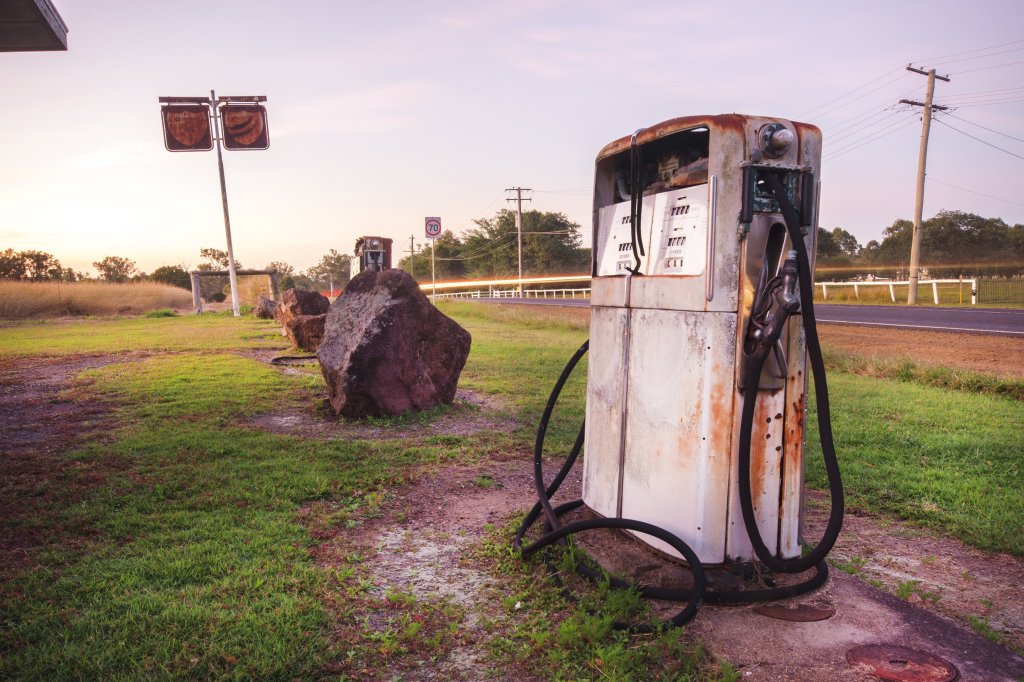
by [robdwildlifephotography] via Pixabay
Tags
dan, boland, dan boland, formula 1, fia, aramco, porsche, hif global, synthetic fuels, e-fuels, carbon neutral, carbon neutrality, sustainability, net zero, 2030 initiative, green hydrogen, captured co2, renewable energy, electrolysis, internal combustion engine, combustion engines, automotive industry, electric vehicles, hydrogen, hybrid technology, zero emissions, climate change, greenhouse gas, carbon footprint, motorsport, racing technology, endurance racing, aviation fuels, jet fuel, renewable electricity, direct air capture, carbon capture, alternative fuels, biofuels, energy transition, decarbonisation, fossil fuels, petrol bans, electric infrastructure, battery production, lithium mining, cobalt, nickel, environmental impact, greenwashing, clean energy, renewable power, energy efficiency, well-to-wheel, electric grid, solar energy, wind energy, energy intensity, manufacturing emissions, logistics optimisation, carbon lifecycle, sustainable development, policy change, european union, 2035 e-fuel exemption, automotive manufacturers, car enthusiasts, petrolheads, innovation, technological progress, mobility future, sustainable transport, emissions reduction, high performance, engine efficiency, turbocharging, brake-by-wire, torque vectoring, carbon fibre, car culture, heritage preservation, sustainability debate, environmental responsibility, racing heritage, automotive future, sustainable mobility, clean transport

 Group-B
Leave a comment