
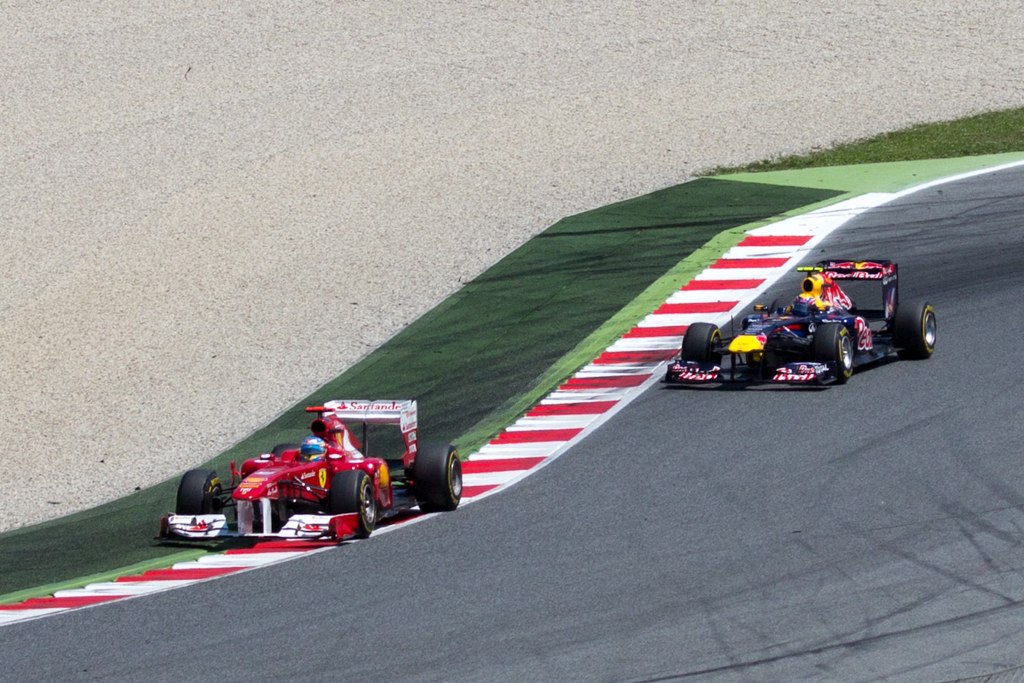
I recently had a conversation, or more accurately, an argument, with a friend in the pub over who is the greatest racing driver of all time. A painful one, as they launched into the typical Senna sermon, praising his “holy” throttle technique.
Now, personally, and on a hill I will happily die on, Jim Clark is the greatest racing driver of all time. From a Lotus 25 to a battered Cortina, he could squeeze the last few horses out of whatever car he touched. That sheer range of talent is why Clark tops my list. But this got me thinking: why is it that whenever we ask who the greatest driver is, the answer is almost always Formula One?
Now Formula One is quick, yes. But let’s not pretend it’s the only motorsport that breeds greatness. Le Mans demands 24 hours of concentration through darkness, rain, and fatigue, and Tom Kristensen, Mr. Le Mans himself, managed to win it nine times. Rally is the art of sliding a car flat-out on gravel, tarmac, and ice, usually with a cliff face waiting millimetres away, where again Sébastien Loeb has managed to win a record nine world championships in a row. And then there’s NASCAR: 500 miles of wheel-to-wheel battle in a 1,000-horsepower monster, as they go round and round their merry-go-round tracks. So if other motorsports are just as demanding as F1, maybe its claim to greatness lies behind money, glamour, and its inherent gentrification, as it pushes other motorsports out of the spotlight.
Now, F1 is the fastest racing series out there, it has the most frequent rule changes, and, most importantly, it has the most funding out of any other racing series. Every season is, therefore, a star-spangled soap opera: rule changes keep competition fresh, aero packages turn the tides overnight, and Netflix has spun it all into high-definition melodrama. The Drive to Survive docuseries didn’t just grow the fanbase; it rewrote it. Since the series launched, US viewership of F1 has more than doubled, and grandstands that were once filled with petrol heads are now being filled with fans of the drama, not the sport.
Netflix has been striving to introduce new demographics within the space, and it’s impossible to deny that they have achieved this, but there’s a catch. This newfound commercialisation hasn’t just elevated F1; it’s leaving every other motorsport in the dust, alongside the working- and middle-class fans who care so deeply about the sport. Le Mans doesn’t have billboards across every major capital city. The WRC doesn’t have TikTok fan edits. Even IndyCar can’t help but feel like it’s the awkward, younger, prepubescent sibling of F1.
F1’s global presence is so strong that it’s rewriting the requirements for “motorsport greatness.” Suddenly, if it doesn’t have billionaire sponsors, celebrity grid-walks, and a heavy online and broadcast presence, it’s background noise. And that’s the problem: the more F1 is glamorised, the more every other motorsport looks, dare I say, irrelevant. And now with F1 being put on this pedestal, it’s becoming increasingly difficult for your average petrol head to enjoy the sport.
F1 has a habit of attracting luxury sponsors, from Rolex, official timekeepers between 2013 and 2024, to Moët & Chandon, the sport’s official champagne. A title sponsorship in F1 doesn’t come cheap; the going rate can be upwards of $50m per year, enough to bankroll an entire Le Mans team for a decade, so only the luxury brands can even think to afford this advertising platform. But these aren’t just logos plastered on F1 paddocks; they’re symbols of a world most fans will never afford. Behind red velvet barriers, brands are renowned for not only funding the sport but also for hosting invite-only paddock lounges, champagne receptions, and five-course meals. At the same time, the cars become little more than background noise for the richest of the rich. For everyone else, the closest they’ll get to this champagne is watching drivers spray it in slow-motion on the TV or social media reels.
Now, any sport with an official champagne would never feel accessible to the working class, but it wasn’t always this exclusive. Not long ago, F1’s sponsors were Marlboro, Camel, and beer companies, who proudly displayed themselves side-by-side advertisements for your local garage. When the FIA banned tobacco advertising in 2006, the sport didn’t just swap sponsors, it swapped out its target demographic. Out goes your local garage and small business sponsors, and in comes Swiss watches, luxury hotels, and private jet firms. F1 stopped smelling like petrol and ashtrays and started smelling like Dior.
The issue is that money doesn’t just fund the racing; it frames the entire event. The more F1 curates itself as an exclusive luxury event to place itself ahead of any other motorsport series, the more ordinary fans are made to feel like outsiders. Instead, for the new F1 fans, F1 isn’t a celebration of speed anymore; it’s an invitation-only gala that just happens to have some racing in the background.
With headlining sponsors selling products that cost more than a decent family car, it’s no surprise the sport itself comes with a price tag to match. At Silverstone, general admission starts at around £279, for which you’ll get a patch of grass, a faint whiff of burning rubber and the off chance of spotting more than just the top of a crash helmet. Want an actual seat? At some circuits, £500+ buys you the luxury of a plastic grandstand seat, a fixed view of a single corner, and a worse experience than you’d get watching from your sofa at home.
And what makes it worse is that those are the “affordable” options. On the other hand, Paddock Club passes run between £4,000 and £8,000 per weekend, and that’s before you’ve booked flights, accommodation, or food. At that point, you might as well buy a used race car and crash it yourself.
Even watching from home now carries a price tag. This added cost only makes the sport even more inaccessible, where the BBC once broadcast the whole season free-to-air; Sky now holds the rights. While the coverage is now slicker, sharper, and more immersive, it’s also locked behind one of the UK’s most expensive sports subscriptions, which feels like a further cash grab when in-person tickets and sponsors already earn so much money. What was once a shared Sunday ritual before the telly is now a gated luxury experience.
In contrast, tickets for grassroots racing can cost as little as £20. These events run on local circuits, with volunteers and small staff numbers keeping overheads low. There are no champagne receptions or velvet-roped lounges, but even the most expensive tickets are still only a fraction of what you’d pay for basic general admission at an F1 race.
What you do get, though, is near-unlimited access. At grassroots races, spectators can often wander through the paddock, talk to drivers, and lean over the cars to really understand what the sport is about. Try that at an F1 weekend, and a six-foot security guard will tackle you, hand you a lifetime ban, alongside a restraining order from Max Verstappen.
Some racing is even free. Certain WRC stages let fans watch from unofficial viewing spots, perched on hillsides and forest tracks, just inches from the action. Paid tickets for official zones guarantee safety, but without the fun of jumping back from a car flying at over 100mph.
And then there’s accessibility for the drivers themselves. F1’s most renowned star, Sir Lewis Hamilton, came from a working-class background. Imagine if he’d never been able to watch the sport as a kid. His father famously worked multiple jobs to support his son’s karting ambitions, but stories like that are becoming almost impossible today. Karting alone now costs a small fortune, and the step up to Formula 4 carries a price tag of anywhere between £100,000 and £350,000 per season. Without major sponsorship or a wealthy family, the path to F1 has gone from difficult to nearly impossible.
Motorsports were never meant to be exclusive, and for an industry that runs on oil and grease, it wasn’t supposed to be as clean and luxurious as it’s being portrayed. The idea that a race, even F1, should be polished into a luxury gala feels completely against the spirit of the sport. At the 2024 Las Vegas Grand Prix alone, more than 100 influencers and celebrities were invited, not for the racing, but to reinforce the image of motorsport as a champagne-soaked spectacle. And honestly? It feels less like a race and more like a red-carpet event with some cars in the background.
I can see why F1 pushes this image: branding itself as a luxury spectacle broadens the audience beyond hardcore petrolheads. But it makes me question the authenticity of the fandom it’s creating. I was lucky enough for my grandad to introduce me to racing by showing me the oily, hands-on side of motorsport, the side where things went wrong and mechanics improvised fixes on the fly. That world feels like it’s disappearing. F1’s pit stops today are clinical, timed to the millisecond, with no hint of the messiness that once defined the sport, and you’ll struggle to find it on social media, too.
The new wave of automotive influencers has bought into this glossy fantasy, perpetuating this false representation. Car reviews lean toward supercars and luxury SUVs, neglecting family cars or beat-up hatchbacks that most people actually drive. It’s all champagne flutes and showroom lights, no grease-stained overalls. And that’s the problem: F1’s rebrand as a luxury lifestyle event hasn’t just reshaped the sport itself, it’s reshaped how the whole car industry gets represented.
I’m not against opening F1 to a broader audience, but representation must go beyond age and gender. Class matters too, and right now, the sport is more inaccessible to working-class fans than ever. The solution to this isn’t as simple as cutting back on luxury packages or ditching big-name sponsors; however, the FIA and other governing bodies could do more to promote alternative motorsport series and protect accessibility for fans who can’t afford the luxury of Sky TV or a ticket to the grand prix. Motorsport doesn’t have to be velvet ropes and bottle service; it can still be messy, greasy, and thrillingly imperfect. The industry just needs to remember that side of itself, and actually show it. Because if social media and luxury sponsors keep reframing motorsport as an exclusive lifestyle brand, we risk losing the raw, inclusive spirit that made it special in the first place.
“F1” by MaxGaiani is licensed under CC BY-NC 2.0.
Tags
formula 1, f1, motorsport, racing, grand prix, drivers, cars, speed, engines, tickets, sponsors, paddock, netflix, drive to survive, fans, fandom, culture, luxury, glamour, exclusivity, accessibility, elitism, money, class, sport, history, tradition, future, le mans, rally, wrc, nascar, indycar, karting, silverstone, vegas, las vegas, hamilton, verstappen, senna, jim clark, sebastien loeb, kristensen, lotus, cortina, fia, sky, subscription, sky coverage, grandstands, petrol heads, garages, mechanics, pit stops, aero packages, soap opera, champagne, influencers, celebrities, branding, advertising, sponsorship, rolex, moet, dior, marlboro, camel, beer, tobacco, dan, dan boland, boland, opinion


 Group-B
Leave a comment