
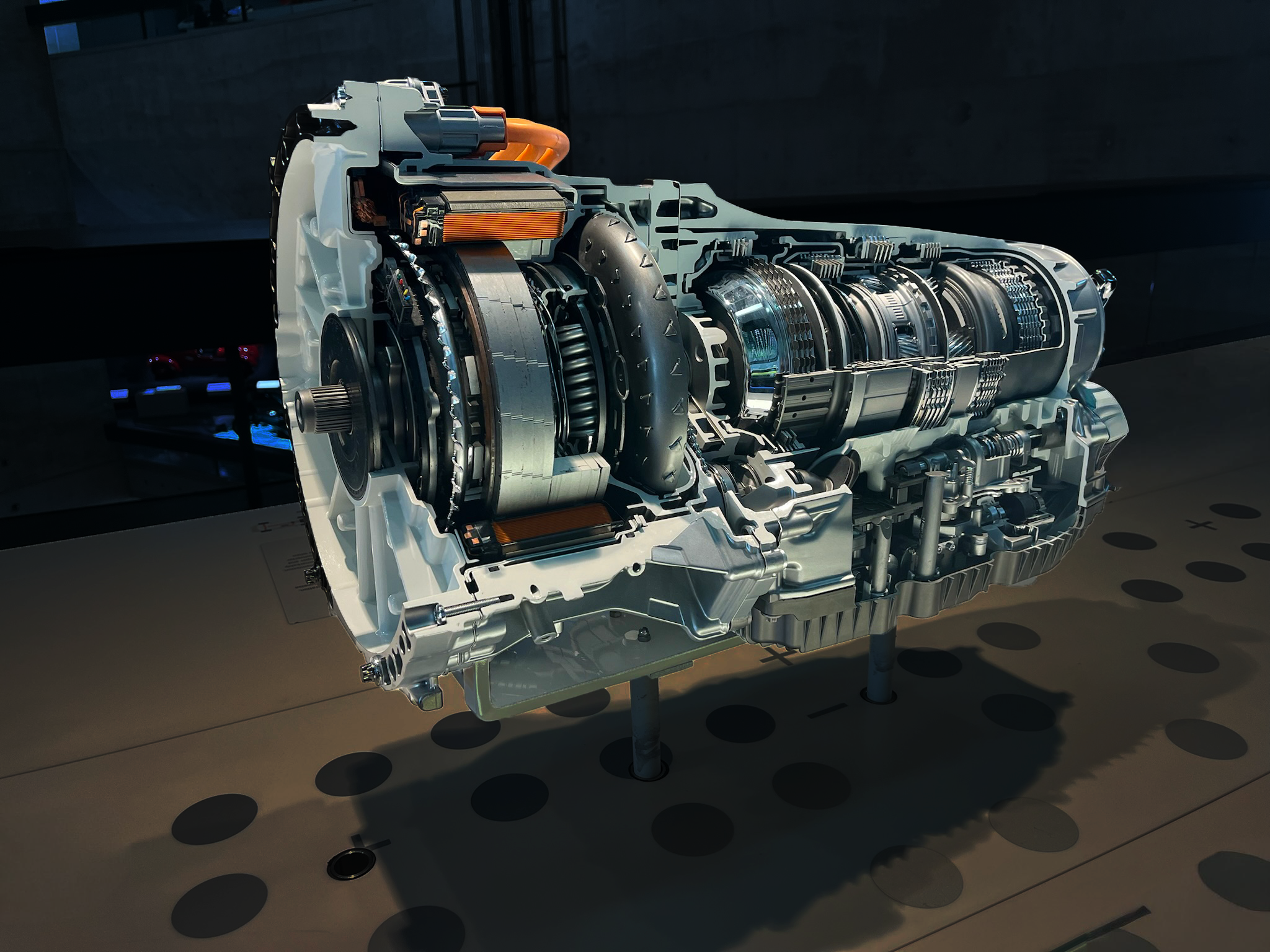
Manual gearboxes are starting to fade out, overshadowed by the rise of battery-powered vehicles. For many, the clutch and gear stick have been the driver’s direct connection to the car’s soul, and now, they’re quickly becoming obsolete.
But Subaru has decided they’re not going to let the manual die at the hands of automatic electric vehicles. Instead, the company is set on making sure they stick around.
Electric cars are welcomed as the green future, but from my experience, starting one can feel oddly detached.
As cars, they lack the growl and vibration of internal combustion engine vehicles, and this small omission has a monumental impact on the overall driving experience. And car manufacturers agree with this.
To bridge this detachment, numerous car makers have developed and implemented speakers positioned throughout their cars to replicate the sounds of thousands of tiny controlled explosions. Hyundai has even gone that one step further with the Ioniq 5 N’s N Active Sound+ system, which accurately mimics the rumble of a 2.0-litre turbocharged petrol engine.
But for some, this simulated immersion isn’t enough.
I’ve always thought the transition to electric cars has been reminiscent of your mum divorcing your impulsive, but cool, rock-and-roll dad and then dating a more sensible, stable boyfriend.
But it’s Subaru who is giving this sensible and stable boyfriend a backwards cap and electric guitar, as they’re set on using an absurd yet rather creative way to make electric cars more engaging.
And they’re doing this by adding a manual transmission to electric vehicles.
Subaru recently filed a patent with the United States Patent and Trademark Office called the JACKRABBIT START SUPPRESSION DEVICE AND VEHICLE, which includes details of both a simulated clutch pedal and a simulated gear stick.
The clutch pedal and gear stick would use sensors to relay position and pressure data to the car’s computer, which then adjusts torque accordingly.
Therefore, we could have a seemingly manual transmission electric vehicle.
The patent’s stated purpose isn’t just to introduce manual transmissions to electric cars; its primary purpose is to prevent sudden, unintentional, rapid starts, also known as jackrabbit starts. They occur when a driver quickly dumps the clutch or suddenly floors the accelerator from a stationary position. In high-torque EVs, which can deliver torque nearly instantly, these lurches could be even more intense.
The Jackrabbit Start Suppression device achieves this by gradually ramping torque rather than delivering it instantly, and it can also slightly override the driver’s input to smooth the launch. So if you release the clutch with a plentiful supply of throttle, you get a smoother and safer start than an excessive spike in torque and a jittery start.
The patent is therefore designed to mitigate the impact of these starts, but it also reveals much more about Subaru’s plans for the future of electric vehicles.
The design suggests the driver could switch between an automatic and a simulated manual transmission with a single switch. This would allow drivers to switch between the classic feel of driving a manual vehicle and the convenience of driving an automatic.
Now, it should be mentioned that this actually isn’t the first time a simulated manual transmission has been proposed by car manufacturers. Back in 2023, Ford filed a patent for a simulated manual transmission for an electric car, including a H-pattern gear stick that controlled actuators to “manually” adjust the car’s power and torque output.
But this technology goes back even further. In 2021, Toyota filed a patent for a similar system that included a “pseudo-shifter” that instructed a computer to manage the motor’s torque and simulate gear shifts, similarly to Subaru’s Jackrabbit Start Suppression device, but this didn’t include the option to switch between manual and automatic transmissions.
Toyota even managed to fit a prototype of its system to a Lexus UX 300e, allowing Inside EVs to test the car. Little footage is available as of now, as it’s still in development, but the images available don’t look dissimilar to any internal combustion engine vehicle’s interior, if you ignore the life support array of wires strewed across the dashboard, which is expected with any prototype.
But Inside EVs’ Patrick George, who had the pleasure of testing the car, states that the team responsible for the system “reverse-engineered an anachronistic technology for EVs just because they thought it would preserve something they loved about driving.” and for that I’m thankful.
Now this system is slightly ridiculous. It doesn’t have any practical application, and automatic cars work just fine, and have done so since 1939. All this device is is a mechanical cosplay, a simulation of something that technically doesn’t have a need to exist anymore.
But driving is not purely technical. There’s a human component attached to it; it’s about timing, muscle memory, and the satisfaction that comes with getting a gear shift just right, even if the car doesn’t technically require it.
If the future of motoring is electric vehicles, then a little bit of absurdity may be exactly what it needs. Adding a human component to a sterile robotic world through a simulated manual gearbox would definitely achieve this.
“Hybrid car transmission” taken by Daniel Boland
Tags
ev, subaru, manual, automotaic, transmission, hyundai, inoniq, jackrabbit, gear stick, clutch, torque, electric, robotic, digital, simulation, ford, toyota, lexus, patent, dan, boland, dan boland, news, cars, driving, future


Leave a Reply